Thursday, January 23, 2014

"I'm a lover, I'm a fighter, I'm a UDT Navy Seal Diver" - LONE SURVIVOR

Lone Survivor
2013 - 121 minutes - Action/Biography/Drama
Director: Peter Berg
Country: United States
IMDB: 7.9
Metacritic: 60
RT: 74%

EpicEnthusiast's Rating: C

Watch this movie if you enjoy:
  • military films 
  • films based on true stories 
  • action/gunfights 
  • Mark Wahlberg 

Avoid this movie if you dislike: 
  • military films 
  • blood/violence 
  • dramatization 
  • tragic stories 

Peter Berg's Lone Survivor tells the incredible true story of Marcus Luttrell and his team of Navy Seals who get caught behind enemy lines in Afghanistan in 2005. Their mission to kill a notorious Taliban leader takes a turn for the worse when they cross paths with three civilians on a mountainside overlooking their target's location. Their decision regarding what to do with those civilians leads to a massive firefight, and changes the course of Luttrell's life forever. 

Ben Foster as Matt 'Axe' Axelson 
From a production standpoint, Lone Survivor is by no means perfect, but is made well enough. The opening shot consists of Luttrell (Mark Wahlberg) narrating over an image of himself being stretchered to an army base hospital. This opening takes a bit of the drama out of the film because we already know he survives; however, it does set the tone for an ultimately tragic ending. We get a decent amount of background from Luttrell's team (Taylor Kitsch as Michael Murphy, Emile Hirsch as Danny Dietz and Ben Foster as Matt 'Axe' Axelson) - it's just enough to make us care about them, but again, not nearly as effective as it normally would be because we all know how they're going to end up. In fact, a different title for the film wouldn't have been such a bad idea, because it would have added a certain shock value for people like me that weren't familiar with Luttrell's book or mission. But all in all, the opening third of the film was its strongest portion, and when the time comes, you're ready to suit up and head up into the mountains with the team. 

Disappointingly, like the fate of the Seals, Lone Survivor takes a turn for the worse when the action begins. It's not that the firefight sequences weren't well done; quite the opposite actually. Berg delivers fast paced, rugged, and for the most part very realistic scenes that definitely keep you on the edge of your seat. They're bloody and bruising, and they back up the film's two Oscar nominations for sound mixing and sound editing. Unfortunately, they also get weighed down by some unnecessary dramatic cliches. 


The team of Navy Seals
Some of these cliches come from Berg's script (co-written by Luttrell and Patrick Robinson). While fighting, the soldiers were often uttering words of patriotism or brotherhood that just seemed forced and out of place. For instance, at one point Axelson was aiming his weapon at an enemy, and with no one else around him says: "You can die for your country; I'm gonna live for mine." A line like this surely looks great on paper, but is it really something that would be said aloud during a hectic gun battle? Even for the most ruthless of warriors like the Seals, it just didn't seem natural. It was as if Berg attempted to implement little nuggets of dramatic dialogue to display just how brave the men were. Especially in a story like this, actions speak louder than words ever could. 

To quote Keith Uhlich of Time Out New York: 

"Berg may be adhering to the basic facts, but his movie's childish machismo is a disgrace to all involved." 

While Uhlich's take is a bit much, I can't help but agree that there was a certain "proud American macho man" feel that was simply overkill. There were also cliched slow motion deaths, and some unrealistic reactions to wounds and overall fatal situations. The men's bravery and camaraderie was utterly clear already, and the fact that Berg felt the need to dramatize the story even more was frustrating. 

Emile Hirsch in Lone Survivor

All that being said, the acting in Lone Survivor was excellent. Kitsch, Hirsch and Foster all did splendid jobs as members of the ill-fated team, and Wahlberg dominated the screen as the lead man. Again, I point the finger at Berg and the screenwriters for the misplaced dialogue, and give the actors the benefit of the doubt when it comes to this common issue. As far as I'm concerned, the script held them back, and kept the film from blossoming to its full potential. 

Overall, Lone Survivor is worth seeing, but is certainly flawed. It's a pulse pounding action thriller that tells an amazing true story, but tries too hard to overstate an already clear example of bravery and heroism. It's well-acted and well-made, but dampened by a sometimes immature script. In the end, Marcuss Luttrell and the men that lost their lives deserve a better film. 

-EE

Lone Survivor Trailer:


Sunday, January 19, 2014

"Ever Want To Be Someone Else?" - BEING JOHN MALKOVICH

BEING JOHN MALKOVICH
1999 - 112 minutes - Fantasy/Comedy
Director: Spike Jonze
Country: United States
IMDB: 7.8
Metacritic: 90
RT: 93%

CinemaChagrin's Rating: A

Watch this movie if you enjoy:
  • Comic fantasies
  • Unique and witty screenplays
  • Totally meta films
  • John Malkovich
Avoid this movie if you dislike:
  • Contemporary fantasies
  • Unconventional storytelling
  • John Malkovich
  • John Malkovich
(some mild spoilers below)

I must admit, the first time I saw Being John Malkovich, I didn't know exactly what to make of it. Well acted, directed, and written, for sure, but I just couldn't wrap my head around the thing. A second viewing completely altered my perspective. Not only is the film excellent from a technical standpoint, it remains perhaps the most original and creative film of the 1990s. 

It is an impossible task to summarize succinctly the plot of BJM, but it goes something like this: Craig Schwartz (John Cusack), a down-on-his luck puppeteer, gets a day job at the insistence of his wife, Lotte (Cameron Diaz). While on the job as a file-puller on the mysterious 7 1/2 floor of a Manhattan office building, Schwartz discovers a tiny door behind a filing cabinet. He crawls inside to discover that the door is actually a portal to the head of John Malkovich (played by himself). After 15 minutes in Malkovich's head, seeing through his eyes, Schwartz gets dumped out onto the side of the New Jersey turnpike. After telling one of his co-workers, Maxine, about the experience, the two decide to set up shop selling trips in Malkovich's head for $200 a pop. And that's just the tip of the iceberg.

Lotte (Cameron Diaz) and Craig (John Cusack) Schwartz
BJM functions on so many different levels. As a fantasy, the universe it establishes is enthralling (plus, Carter Burwell's dreamlike musical score helps a lot with setting the mood). As a comedy, it is absolutely hilarious, though typically not in a completely laugh-out-loud way (it also gets much, much funnier upon repeated viewings). The film raises insightful questions about self-identity, narcissism,  and human sexuality. Finally, it is super meta (self-aware), featuring cameos from several big-name actors and of course John Malkovich himself. It's difficult to imagine any other actor filling the role, as Malkovich is well-known enough to be recognizable, but not a superstar who would overshadow the entire film. Malkovich's stage and theater background also become relevant to the plot, as he becomes a puppet in a play larger than himself. (After reading the script for the first time, he reportedly asked the writer, Charlie Kaufman, why the film couldn't be called "Being Tom Cruise." Kaufman argued adamantly that he would never rewrite the screenplay with another actor to serve as the central figure.) 


Craig on the side of the NJ turnpike after his first Malkovich experience
Speaking of Charlie Kaufman, one cannot help but marvel at the creativity and originality of his screenplays. They are truly unlike anything else in Hollywood today. In addition to BJM, Kaufman has written perhaps the most inventive book adaptation ever put to screen, Adaptation, as well as Eternal Sunshine of the Spotless Mind, a very unconventional love story. His irreverent and smart writing style in BJM ensures that the audience can never quite predict where the story is headed. So many exciting and unexpected twists and turns fill the plot, but it never becomes overwhelming. Dialogue between characters is both hilarious and appropriately crazy for the fantasy world the film creates.

An excellent screenplay alone does not a movie make, however. In his first feature film, Spike Jonze proved a competent and creative director. His camerawork manages to keep up with all the zany craziness of the plot, and does so in very satisfying ways. The viewpoints from inside Malkovich's head immerse the viewer in the film, as we are allowed to see the action both from within and outside him. Fortunately, Jonze does not rely on fancy editing and rapid cuts, unlike many directors who got their start in music videos.


Schwartz and his coworker Maxine (Catherine Keener)
Though the film's standout element is the screenplay itself, all the actors in BJM are at the top of their game. John Cusack plays the obsessive puppeteer Craig Schwartz with surprising sympathy, despite the nature of the character. Catherine Keener as Maxine is pitch-perfect as the antithesis of Schwartz in every way possible (she nabbed her first Oscar nomination for the performance). Orson Bean's performance as the CEO of Lestercorp is absolutely hilarious, a delight to watch. Finally, Cameron Diaz serves as the heart and soul of the movie as Craig's wife, Lotte. Practically unrecognizable under a frizzy wig, Diaz's naive and loving Lotte is the most sympathetic character in the film. After seeing her excellent acting skills in BJM, I am somewhat saddened that Diaz seems to have acted mostly in mediocre films since (with the notable exceptions of Shrek and Gangs of New York). 
The entrance to Malkovich
Of course there is one actor I haven't mentioned yet, an actor whose name happens to appear in the title of the film. John Malkovich delivers an astounding performance. He not only plays himself, but also the role of a puppet under the control of others. As the linchpin that holds the film together, Malkovich is an absolute joy to watch. Playing an actor being forced to act, he traverses all ends of the emotional spectrum with surprising physical intensity. The fact that the Academy passed up Malkovich for a Best Supporting Actor nomination for the likes of Haley Joel Osment is infuriating to me. And don't even get me started on the fact that The Sixth Sense was nominated for Best Picture and BJM wasn't. In the wise words of the late Roger Ebert: 

"Either Being John Malkovich gets nominated for Best Picture, or the members of the Academy need portals into their brains."

Well said, Roger. Apparently they do. BJM is easily the most creative film of the 1990s. It may not be the most expansive or impressive film of the decade, but in terms of sheer originality, I have yet to see any film that rivals it. It's definitely not for everyone - if you have trouble accepting fantastical premises for films set in the real world or prefer more conventional storytelling, then I would steer clear - but if you appreciate zany films that make you sit back and ponder, "What the hell did I just watch?", then you'll love it. Supremely enjoyable, infinitely re-watchable, and never dull, I highly recommend Being John Malkovich.

-CC

P.S. I think the trailer for the film spoils way too much, so here is my favorite track from the score to the film. I think Carter Burwell is an underrated film composer.


Thursday, January 9, 2014

Compensating for Something? - THE WOLF OF WALL STREET

THE WOLF OF WALL STREET
2013 - 180 minutes - Biography/Comedy/Crime

Director: Martin Scorsese 
Country: United States
IMDB: 8.7
Metacritic: 75
RT: 75%

EpicEnthusiast's Rating: 9/10


Watch this movie if you enjoy:

  • crime comedies 
  • stories (loosely here) based on actual events
  • Martin Scorsese 
  • Leonardo DiCaprio 

Avoid this movie if you dislike: 
  • profanity
  • drug use
  • graphic nudity/sexual content
  • long films (three hours) 

(a couple very minor spoilers below)

Heeeeeeeee's baaaaaaaacckk. 

The Wolf of Wall Street marks director Martin Scorsese's first crime drama since his best director-winning The Departed in 2006, and his mastery of the genre is totally reiterated. Leonardo DiCaprio is back as his lead man for the fifth time, (Gangs of New York, The Aviator, The Departed, Shutter Island) and Scorsese's quintessential black comedy and narrated storytelling is as strong as ever. 

In this film, DiCaprio plays the role of Jordan Belfort, one of the most infamous stock brokers of the 1990's. At just 22 years of age he got his first job as a broker and fell in love with the crazed world of Wall Street. He learns the ropes, develops an effective selling strategy, and finds his niche, only to be forced into a sleazy job selling penny stocks in Long Island when his firm goes under. He takes that office by storm, and eventually starts his own firm, called Stratton Oakmont, with Donnie Azoff (Jonah Hill). Cue the success, money, women, drugs, sex, and law breaking, and let the games begin. 

Leonardo DiCaprio as Jordan Belfort
Like many of Scorsese's crime sagas, The Wolf of Wall Street is driven by very strong acting. DiCaprio leads a great cast, and gives yet another dynamite performance as his voice over moves the story smoothly along. This role was similar to his in The Aviator, in that he had to balance a roller coaster of emotions while portraying the money hungry, drug-addicted, and sex-crazed Belfort. The depiction of Belfort (and the film as a whole) was intentionally over-the-top, and Dicaprio did a superb job. Is it enough to earn him his long-awaited Oscar? I don't think so, but that's partially due to the stiff competition this year. Among others, I think Bruce Dern in Nebraska, Chiwetel Ejiofor in 12 Years a Slave, and Christian Bale in American Hustle will have something to say about the best actor award, but DiCaprio should at least receive a nomination. 

Also thoroughly impressive was Jonah Hill as Donnie Azoff. I must admit I was skeptical of Hill coming in, primarily because of seemingly insincere comedic films. But to be fair, I've yet to see Moneyball, where he's supposed to be very strong in a supporting role. Here, his comedic background was far from concealed, but he held up very well in a few serious scenes. He also put forth some fantastic quotations: 


Jonah Hill as Donnie Azoff 
"You show me a pay stub for $72,000, I quit my job right now and work for you."

"Hey Paulie, what's up? No, everything's fine. Hey listen, I quit!"


 "What are these sides, they cure cancer?!?!" (Max Belfort)

"The sides did cure cancer there, that's the problem, that's why they were so expensive." 


The cast also featured a number of interesting cameo appearances; three of which were directors. Rob Reiner (This is Spinal Tap, Stand by Me, The Princess Bride) played Jordan's father Max Belfort, Jon Favreau (Elf, Iron Man, Iron Man 2) played Manny Riskin, a financial agent, and Spike Jonze (Being John Malkovich, Adaptation, Where the Wild Things Are) played Dwayne, an associate in Belfort's firm. Reiner, who has acted in over 60 films, was the strongest of the three in his first major role in over a decade. He had the impossible job of attempting to control his son Jordan and all the antics at the firm. Jon Bernthal, best known for his role as Shane on The Walking Dead, was very convincing as the drug-dealing muscle man Brad, and Margot Robbie coupled her astonishing physical appearance with some strong acting chops as Naomi Belfort. Not to mention a hilarious scene or two with Matthew McConaughey as Mark Hanna. The acting very much stood out, and was film's most redeeming quality. 

That being said, great acting alone doesn't make a great movie. Another staple of Scorsese pictures is his fluid and compelling technique of storytelling. The above-mentioned narration from DiCaprio is one of a few different styles he used to move the story along in The Wolf of Wall Street. In a plot jam-packed with relationships, it was important to distinguish which ones were meaningful and which ones weren't. For instance, it was clear from the beginning that Belfort's first wife Teresea Petrillo didn't mean a whole lot to him, and so we fittingly didn't see much of her. There were a couple scenes early in the film, and one emotional scene when she finally catches him in the act with another woman, but Scorsese made sure that the audience saw much more of Naomi, the wife that Belfort really cared about. With her, a number of different highs and lows were put on screen. We saw the first time they met, their wedding, Belfort gifting her a yacht with her name on it, their compassion, their hatred, and everything in between. Like all the relationships in the film, emphasis was placed exactly where it was needed. Scorsese's variation of quick, punchy clips and drawn out, oftentimes painful scenes was essential to the story flow. 


Naomi denying access to Jordan 
This was also true of regular plot development. The three hour length of The Wolf of Wall Street is one of the the aspects of the film that has gotten some flak (certainly second to the very vulgar content.) While I think Scorsese's longtime editor Thelma Schoonmaker did her typical fantastic job, I can definitely see where some of the criticism is coming from. The story was filled characters and they needed a considerable amount of time to develop, but I can't deny that it could have been trimmed a bit. In particular, there was a sequence on the yacht where Jordan and Donnie were attempting to sail to Monaco with their wives and got caught in a tsunami-like storm. The captain warned them of the rough waters beforehand, and the whole shipwreck and rescue thing just seemed very out of place, and irrelevant to the plot. The unneeded scenes were small in number though, and the 180 minutes really flew by for me. Scorsese used a handful of action-packed montages to speed things up, and the original cut was over four hours, so it could have been much longer. 

To conclude, The Wolf of Wall Street will someday be considered another classic from Martin Scorsese. It's very different in tone from his other crime sagas like Goodfellas, Casino, and The Departed, but it's every bit as entertaining. The characterization is top notch, the acting is award worthy, and the production is everything you'd expect from one of the legends of cinema. If you can handle the profanity and sometimes graphic content, it'll be the most fun you've had at the theater in a while. 

-EE


As of January 9th, 2013, The Wolf of Wall Street is in theaters everywhere. Here's the trailer:


Thursday, December 26, 2013

A Poignant Look At Rural America - NEBRASKA

NEBRASKA

2013 - 115 minutes - Dramedy
Director: Alexander Payne
Country: United States
IMDB: 8.1
Metacritic: 86
RT: 91

CinemaChagrin's Rating: A

Watch this movie if you enjoy:
  • Gorgeous B&W cinematography
  • Bruce Dern
  • Quirky family relationships
  • Road trip movies

Avoid this movie if you dislike:
  • Slow-paced films
  • Profane/crude language
  • Potentially offensive caricatures of Midwesterners

I entered the theater looking forward to seeing Nebraska because of its intriguing premise and excellent critical reception. I enjoyed director Alexander Payne's previous film, The Descendants (reviewed on this blog by my colleague EE), but was not blown away; however, Nebraska completely exceeded all of my expectations. It is now by far my favorite film of the year (and I've seen many excellent films, including Gravity, 12 Years A Slave, and American Hustle), an incredibly poignant and touching glimpse of familial and social decay in rural America.
Woody (Dern) and David (Forte) on the road

The plot of Nebraska is relatively simple: 77-year old Woody Grant (an astoundingly moving Bruce Dern) receives a gimmicky marketing promotion in the mail proclaiming that he has won $1 million. After Woody attempts to walk all the way to Lincoln, Nebraska from his home in Billings, Montana several times, his exasperated son David (Will Forte) agrees to drive him there, allowing his aging father a chance to indulge in his fantasy. Thus the stage is set for a road trip that introduces the audience to all the members of Woody's dysfunctional family while showcasing social and economic decay across a bleak Midwestern landscape. 

Before I discuss the top-notch writing and acting of Nebraska (which comprise the backbone of the film's story), I'll begin by stating that the film's visual composition and cinematography perfectly suit the events occurring onscreen. Director Alexander Payne's decision to shoot in black and white is a masterful one. Characters and locations appear in various shades of dull grey, emphasizing the aging nature of the small Midwestern town of Hawthorne, Nebraska in which most of the film takes place as well as those who inhabit it. Long, expansive shots of the empty countryside and the dilapidated hamlets that dot it further reinforce the feeling that this region of the country is long past its prime, just like the protagonist, Woody. 

Woody upon seeing the old family homestead
Like all good road movies, Nebraska is more about the journey itself than the destination. All of the characters are fairly static, and the film lacks any grand, sweeping conclusion or message. Instead, the plot focuses on the inter-familial dynamics of the Grant clan, specifically the relationship between Woody and David. The characters don't necessarily change significantly during the course of the film; however, David's interactions with his family members and the citizens of Hawthorne (birthplace of Woody) reveal quite a bit about the history of the family and the town and shed some light on their respective declines. 

The excellent and understated script by screenwriter Bob Nelson allows the performances of the actors to come across as quite genuine. Equal parts laugh-out-loud hilarious and deeply sorrowful, the script never becomes preachy or sappy. I was genuinely moved by the story and the relationships between the characters. Some have criticized the film's portrayal of many characters as offensive, claiming that it perpetuates stereotypes about rural Midwesterners. I see where they are coming from, as a few characters (depicted as complete idiots) seemed a bit over-the-top. However, none of this ever truly bothered me, as such educational and vocational deficiencies are widespread in rural America. Additionally, both the director and screenwriter hail from that region of the country (Payne was born in Nebraska, Nelson in South Dakota). 


David once again attempts to convince Woody not to walk to Nebraska
In addition to its excellent direction and writing, Nebraska features some of the best acting performances I've seen all year. Indeed, every actor in the film (from the leads all the way down to the local townsfolk, played by non-actors) does a superb job. As many critics have said, Bruce Dern gives the performance of a lifetime, playing the worn-down Woody Grant so naturally he could have emerged from a documentary. Dern is both hilarious and heartbreaking, yet consistently compelling. He ought to be a shoe-in for an Oscar nomination for Best Actor, and I wouldn't be surprised if he won it (he already won the Best Actor award at the Cannes International Film Festival). Will Forte also puts on a very genuine performance as Woody's concerned son, David. Typically a comedic actor, Forte portrays a son who has been continually let down by his father his entire life but is not willing to give up on him. In a supporting role, Bob Odenkirk plays Woody's older son, Ross, who is initially skeptical of David's efforts to drive their father to Lincoln but eventually joins in. 


Woody and his wife Kate (June Squibb) share a rare moment
Of special note, though, is June Squibb as Kate, Woody's husband. Kate tells it how it is with outrageous sass, telling off family members and deceased relatives without any mercy. I sometimes had trouble deciding whether to burst out laughing or cover my mouth in shock at her raunchy and deliciously crude lines. The film probably got an R rating solely because of her! Some of her best excerpts:

"I never knew the son of a bitch even wanted to be a millionaire! He should have thought about that years ago and worked for it!"

"I ain't fiddlin' with no cow titties. I'm a city girl!"

[looking at graves] "There's Woody's little sister, Rose. She was only nineteen when she was killed in a car wreck near Wausa. What a whore!"

Squibb steals every scene she's in and gives an absolutely delightful performance. She's been nominated for the Best Supporting Actress Golden Globe - I really hope she gets an Oscar nod as well. 

Kate (Squibb) tells off members of the Grant clan
Alexander Payne's new film expertly balances humor and sorrow, featuring some of the best performances of the year, a top-notch script, and gorgeous cinematography. Accompanying all of this is a somber soundtrack by Mark Orton that perfectly mirrors the mournful nature of the film. Nebraska definitely isn't for everyone - it moves along a relatively slow pace (just like the protagonist, Woody) and is a bit over-the-top at times - but if you enjoy compelling dramas that offer a sincere look into the lives of ordinary people, you'll love it. My favorite film of the year thus far, and highly recommended.

-CC

As of December 26th, 2013, Nebraska is still in theaters. Check out the trailer:


Saturday, December 14, 2013

Yet Another Sappy Holocaust Film - THE BOOK THIEF

THE BOOK THIEF
2013 - 131 minutes - Drama/War
Director: Brian Percival
Country: United States/Germany
IMDB: 7.4
Metacritic: 53
RT: 49%

CinemaChagrin's Rating: C+

Watch this movie if you enjoy:
  • Geoffrey Rush or Emily Watson
  • Excellent cinematography
  • Gorgeous use of color
Avoid this movie if you dislike:
  • Ridiculous accents and strange language selections
  • Sterilized depictions of war and death
  • Slow, episodic pacing

Disclaimer: I have not read the novel by Markus Zusak (The Book Thief) upon which this film is based.

The Book Thief is okay. Just okay. Not great, not terrible, just average. Fans of the book should probably go see it to satisfy their curiosity, but I cannot say if the film serves as a faithful adaptation. Those who have not read the book probably shouldn't bother with going to see the film in theaters. If you're interested in Holocaust tales or the lead actors in The Book Thief, wait until it comes out online or DVD rental - it's not worth the price of a movie ticket.

The film focuses on the life of a young orphan named Liesel Meminger (played by an excellent Sophie Nelisse) who at the beginning of the story is adopted by the Hubermann household. Liesel quickly warms to her new papa, the benevolent Hans Hubermann (Geoffrey Rush), an unemployed painter. In contrast, her adoptive mother Rosa treats Liesel with contempt for a long while before finally warming up to her. The film chronicles their life before and during Germany's entrance into World War II and specifically revolves around the family sheltering a Jew in their basement.

Sophie Nelisse as Liesel Meminger
I'll start with what the film does well. Despite mostly mixed reviews overall, The Book Thief looks absolutely gorgeous. Director Brian Percival (best known by his work on Downton Abbey) has crafted a film that is very pleasant to look at. The camera moves austerely and deliberately, allowing the viewer to focus on interactions between characters. The cinematography features an excellent blend between personal close-ups and sweeping shots of both wintry and summer landscapes of the German countryside. The setting (shot on location in a small town in Germany) lends authenticity to the narrative and is quite beautiful in its own right. Also of note is the absolutely phenomenal use of color in the film. Blood red Nazi flags dot the small town where the Hubermanns live, children frolic through vibrant autumn forests, and steam billows out of trains rushing across the snow-covered wilderness. Despite all the other issues plaguing The Book Thief, it is a pleasure to look at.

In the bomb shelter
Aside from the stellar visuals, the acting also impressed me (for the most part). I love Geoffrey Rush, and he certainly did not disappoint (though his German accent was jarring - more on that later). Emily Watson also put on a fine performance as the strong caretaker who appears icy on the outside but actually has a heart deep down. I was particularly impressed by newcomer Sophie Nelisse, a 12-year old French-Canadian actress. Acting in a second language (English) with a German accent is no small feat even for seasoned actors, and newcomer Nelisse did a fine job, emoting childlike exuberance and tragic sorrow equally well. The rest of the cast were competent, if not spectacular. Many of the supporting actors (who I suppose were German) spoke their lines in a somewhat stilted manner, which brings me to my next point. 


Hans Hubermann (Rush) and Liesel (Nelisse) embrace following his return from war
Unfortunately, Americans are infamous for their intense dislike of subtitles. I understand that making a movie intended primarily for the US market in a language other than English is financial suicide. Nevertheless, the language choices and accents in this film irritated me to no end. The characters were all German, yet they all spoke English (with varying degrees of German accents, since not all of the actors were German); however, their speech patterns were riddled with German words, such as "ja", "nein", "und", "danke", etc... Additionally, certain characters spoke German throughout the movie. The book burning scene had the Nazi spokesman screaming in German (I suppose you couldn't have an authentic anti-Semitic rant in English), the school choir sang in German, and the gravedigger at the start of the film delivered last rites in German. Either have everyone speak English, or everyone speak German! Mixing the two completely shattered my suspension of disbelief and made me constantly question why people were switching between the two languages. Did everyone in Nazi Germany like to practice their English? This irregularity even extended into the books in the film! The covers were often in German with English text on the pages!

Aside from the strange language choices, a number of groan-inducing movie cliches also served to shatter my suspension of disbelief while watching The Book Thief. You have the scene where a character dives underwater and the camera pans over the surface for an overly-long period of time, leaving the audience waiting in "suspense" to see if he will emerge (and of course he does). You have the scene where a female character that displayed fighting prowess earlier in the film is suddenly weak and helpless when a bully beats up her best friend. You have the oh-so-classic scene where the family rushes to conceal the Jew hiding in their basement as SS officers are sweeping the street. You have the romantic who dies while professing his love. And of course you have the pointless narrator (in this instance, Death), who serves really no purpose at all other than providing a ham-handed introduction and conclusion. The list goes on.


Every family has their secret
Probably the film's biggest single weakness is the pacing. The first 2/3's of The Book Thief amble along at a slow but steady pace (though the timeline is somewhat confusing - the film jumps months at a time with few transition scenes). About 3/4's of the way into the story, the film suddenly throws climatic event after event at the audience as characters are sent to war or disappear only to reappear without any explanation at all. The viewer has no time to process what is happening. Then, the film abruptly reaches its conclusion in a very hurried and jarring manner. I have no problem with drastic shifts in pacing in cinema if done well and with a purpose; however, The Book Thief just felt like the screenwriter attempted to cram in all of the really important events of the book while leaving out everything else (a regrettable if understandable occurrence, as the novel is over 500 pages long). 


Liesel retrieves a book following the Nazi book burning ceremony
My final major qualm with The Book Thief involves the distortion of morbidity in cinema. (Obviously this doesn't apply to films that deliberately go over-the-top or are aiming for certain moods.) It is apparent that makers of the film were aiming for a PG-13 rating (which typically appeals to the widest possible audience and brings in the most money). However, I can't stand it when films obscure or sanitize death when depicting horrific events, especially historical ones. Near the end of the film, an Allied bombing raid kills many people in the town. As the camera pans over a line of dead bodies in the street, each one appears like a perfectly-embalmed corpse - perfectly preserved, no blood, etc. How exactly did they die? Did Death magically swoop down and steal their souls while leaving their bodies untouched? I imagine with the firebombs and collapsing buildings one would see crushed/missing limbs, severe head trauma, burn wounds, and the like. Maybe they died from a shockwave? I kid. But seriously, that's actually one reason why I prefer "serious" films to go all out on violence (even if it warrants an R-rating). PG-13 films sanitize violence and present it in a totally disingenuous manner, downplaying the realities of war and death. (Hotel Rwanda was one of the worst perpetrators of this phenomenon - a movie about mass genocide should not be rated PG-13, IMO). While I am not a huge fan of Schindler's List, it definitely portrayed the horrors of WWII and the Holocaust quite well in this regard. Just my $.02.

Anyway, I'll step down from my soapbox now. As I've stated previously, The Book Thief is an average film. It's by no means terrible, but it is nothing to write home about either. If you are interested, by all means go see it in theaters. But I'd recommend saving your hard-earned money for the slew of excellent films coming out this December, including American Hustle, The Wolf on Wall Street, and Inside Llewyn Davis.

-CC

As of December 13th, 2013, The Book Thief is in theaters everywhere. Here is the trailer:


Monday, December 9, 2013

"Sometimes Your Battles Choose You" - OUT OF THE FURNACE

OUT OF THE FURNACE

2013 - 116 minutes - Crime/Drama/Thriller
Director: Scott Cooper
Country: United States
IMDB: 7.4
Metacritic: 64
RT: 52%

EpicEnthusiast's Score: 8/10

Watch this movie if you enjoy:

  • character studies  
  • stylistic films
  • northeastern United States landscape
  • Christian Bale and/or Woody Harrelson 

Avoid this movie if you dislike:
  • violence
  • slow-moving plots
  • limited action

Scott Cooper's Out of the Furnace is a character-driven story centered around two brothers in Braddock, Pennsylvania. Russell Baze follows in his father's footsteps and works at the local mill in town. His younger brother Rodney is a soldier in the army, and returns home to seek a job when his service in Iraq is completed. During that search for work he goes missing, and forces Russell to decline insufficient law enforcement efforts and deliver justice himself. 

The story is driven by its characters as the characters are driven by their actors. Christian Bale, Casey Affleck, and Woody Harrelson lead a lush cast that blend fluidly and create a handful of very powerful scenes. Willem Dafoe, Forest Whitaker and Zoe Saldana are featured in supporting roles, but are all very meaningful in their own ways. The script that Cooper and Brad Ingelsby put forth is solid enough, but it's nothing special. Top-notch acting from everyone involved is ultimately what makes Out of the Furnace a compelling story. 


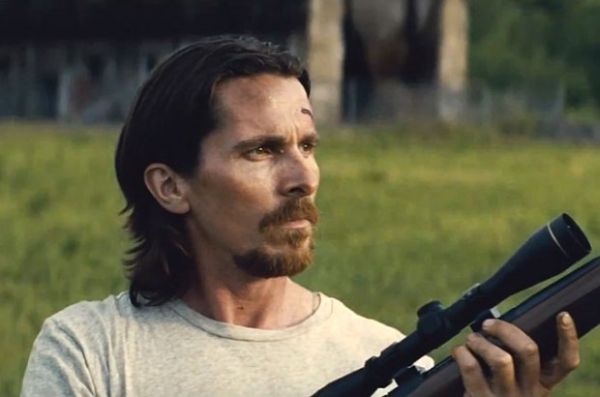
Christian Bale as Russell Baze
Bale plays the lead of Russell Baze, and conveys a subtle dominance throughout. Russell is soft-spoken and content on the surface, but has his fair share of troubles. A seemingly comfortable life turns for the worst when he drunkenly kills two people in a car accident, and gets sent to prison. His time inside is rough, but not nearly as rough as it will be when he gets out. He finds that his father has passed away, his girlfriend is now seeing the police chief of a town where everyone knows each other, and his brother has been traumatized by war. On top of all of that, it's rumored that the mill he's working at is going to be closing.

What Bale does best is balance the emotions of it all. He's still and collective when he can be, and firey and impassioned when he has to be. He controls the screen and makes it impossible to doubt that the movie is his. It's tough to compare this role to that of his as Batman in Christopher Nolan's trilogy, but it's right along side his leads in American Psycho, The Prestige and 3:10 to Yuma as one of the best of his career. (I've yet to see The Fighter, for which he won an academy award for best supporting actor)


Casey Affleck as Rodney Baze
Russell's younger brother Rodney is played by Casey Affleck, who I believe is one of the most underrated actors working today. (see: The Assassination of Jesse James by the Coward Robert Ford) Perhaps he's a bit overshadowed by his brother Ben Affleck, but as he displayed in Out of the Furnace, he's immensely talented. Rodney is determined to find work when he gets back to Braddock, but is severely shaken up by his experiences overseas. He doesn't have any desire to work in the mill like his brother and father, and is ultimately lost. Affleck masterfully portrays a man changed by war who is simply looking for answers. He eventually takes up fighting as both a means of money, and a way to let off steam. He's quite convincing despite his lean frame, and gives off a real sense of anger, confusion and liveliness. Despite their differences, he meshes perfectly with Bale as his brother, and puts out a dynamite performance. 


"I have a problem with everyone"
Woody Harrelson is Harlan DeGroat in a role that reminded me of his lead in Oliver Stone's Natural Born Killers. DeGroat is a borderline-psychotic drug abuser that heads a fight club/drug cartel up in the Appalachian mountains near the New Jersey Border. He's the kind of guy that starts a fight for the hell of it, and won't hesitate to kill. I don't know what it is about Harrelson playing violent psychopaths, but it works. He dominates every scene he's in, and has you fearing that he's going to clock anyone he's talking to. It takes a special kind of actor to depict this type of monstrous character well, and although he was slightly over-the-top at times, it was a job well done.

The biggest flaw of Out of the Furnace comes from the plot and its structure. It has trouble transitioning smoothy from one sometimes emotionally draining scene to the next, and feels choppy throughout. It's not that the scenes weren't well done, but rather that their endings were occasionally abrupt, and it felt like events were being thrown up onto the screen in no particular order. They were in chronological order of course, but it seemed to me that the editing could have been sharper. Along with that, the plot contained a few minor, but noticeable inconsistencies. Certainly not any gaping holes, but a couple head-scratching moments, as well as a little disbelief. They didn't ruin the film by an means, but they definitely dragged it down a bit.

That being said, the strong acting and other redeeming qualities outweigh the above issues. Not only are the characters well developed, but they're captured wonderfully too. Cooper and cinematographer Masanobu Takayanagi do a splendid job of creating unique shots of their characters, and immersing the audience in the landscape. It's very artsy at times, but steers clear of pretentiousness. The pleasing aesthetics may have come partially from renowned producer Ridley Scott, who constantly directs beautiful films. (Leonardo DiCaprio was also a producer, and was originally set to play the Russell Baze.) It was very much a movie that got much of its identity from its setting, and Cooper and company used it to their advantage. The soundtrack was also well chosen, and very fitting to the area and storyline.

The filming location of Out of the Furnace - Braddock, Pa
Overall, Out of the Furnace is a supremely acted film that uses its characters to tell a powerful story. Bale, Affleck and Harrelson give memorable performances, and are supported by a worthy cast. Uneven editing and minor plot issues hold it back from greatness, but it's well worth watching. I'd put it right at a 7.5/10, but I round up because of those performances, and overall production quality.


-EE


As of December 9, 2013, Out of the Furnace is in theaters.


Friday, December 6, 2013

"Wanna fight?" - ONLY GOD FORGIVES

ONLY GOD FORGIVES

2012 - 90 minutes - Crime/Drama/Thriller
Director: Nicolas Winding Refn 
Country: Thailand
IMDB: 5.9
Metacritic: 37
RT: 40%

EpicEnthusiast's Rating: 8/10


Watch this movie if you enjoy:

  • stylistic/artsy films
  • films in foreign countries 
  • unique styles/cinematography 
  • Ryan Gosling

Avoid this movie if you dislike: 
  • graphic violence/blood
  • Thai language 
  • slow pacing 
  • seriously though: graphic violence/blood 

Before I begin, I'd like to note the very low scores above. They're certainly the lowest either one of us have ever reviewed, but they're slightly misleading. Only God Forgives is very much a film that you either love or hate. The IMDB score obviously reflects a lot of hateful reviews, but a lot of those users gave it a 1/10, which is simply unfair. You don't have to enjoy the film, but to say it doesn't possess any quality whatsoever is ignorant. A lot of the critics definitely didn't enjoy it, but five of them on Metacritic gave it a positive score. Also, for the 19 negative reviews, there are 14 neutral or yellow-coated reviews, potentially indicating that some quality was recognized, but still overshadowed by the film's content. I'll touch on this content below, as I think it also plays a role in the low scores. 


From the moment I saw the trailer for Only God Forgives, my expectations were sky high. I'm a huge Ryan Gosling fan, and I absolutely adore Drive, the first film he made with director Nicolas Winding Refn. Although I gave their second go-round an 8/10, I'd be lying if I said my expectations were completely met. But they almost were. For this review, I'm going to point out the main points of criticism the film has gotten, and then provide my take on them. 


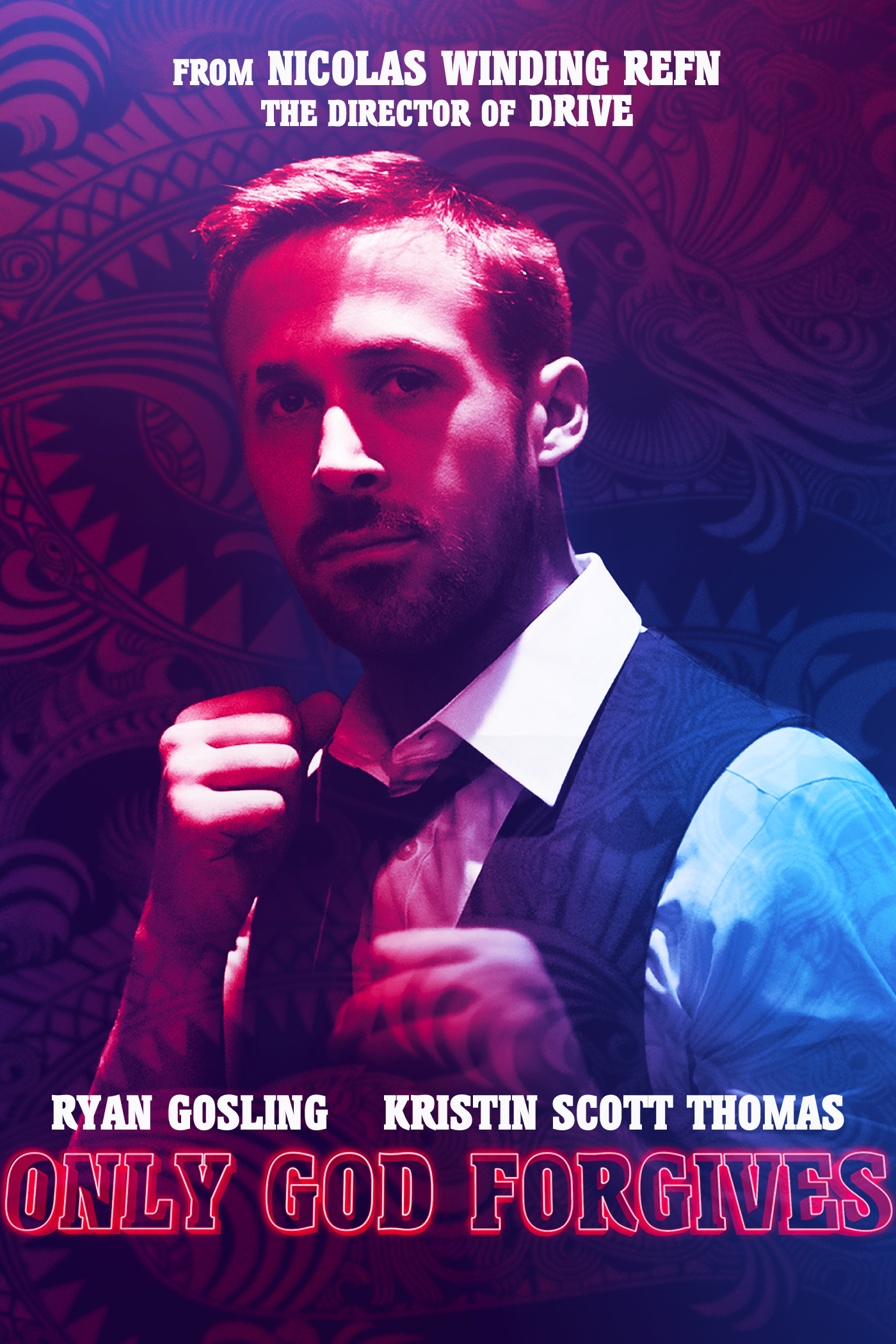
The story revolves around Julian (Ryan Gosling), who is an American drug-smuggler operating out of a boxing club in Bangkok. His brother is along side him in the business, and when he is killed, "The Devil" (Vithaya Pansringarm as Chang) is summoned, and the violent revenge game begins. 

It's hard to watch: Yup. Even as a big crime genre fan, I'll be the first one to tell you that Only God Forgives is very tough to watch at certain points. Nicholas Winding Refn is known for heavy violence in his films, and although Drive is the only other one of his I've seen, I'll say that it was tame compared to this. There's blood, gunshots, stabbings, amputated limbs, lacerations, gauging, beatings and more. Even actress Kristen Scott Thomas (who plays Julian's mother Crystal) came out and said it was hard for her to watch. It's a brutal story and borderline disturbing, but it all served a purpose, and should not define the film in a negative way. 


The question becomes: is the violence necessary? And I would say to tell this type of story, yes it is. The setting is the crime underworld of Bangkok, which like any large crime-filled city, is certainly no stranger to violence. Not only that, but violence in Thailand is very different from the violence we're used to seeing in Hollywood. It consists of mostly gun violence, which is featured a bit in Only God Frogives, but is second to sword violence. Chang, the perpetrator of a lot of the brutality, is a retired cop who essentially still practices out in the city. He's from Thailand of course, and is a master fighter with both the sword and his fists. His development is very well done, and Refn makes it clear that his violence is simply part of his outlook; part of his culture. This doesn't make his actions any easier to watch, but it explains why they're there. 


Vithaya Pansringarm and Kristen Scott Thomas in Only God Forgives
It looks good, but that's about it: I can't emphasize the former enough. Only God Forgives is an absolutely beautiful film. Refn and cinematographer Larry Smith use a combination of vibrant lighting and masterful cinematography to give us a very clear picture of Bangkok's inner city. They take us through lavish nightclubs and dark alleyways with a certain stability and fluidity that makes it very pleasing to watch (despite the gory content). 

I think a lot of the latter criticism comes from a few aspects of the movie. One deals with that cinematography, and Refn's style overall. I get the impression that a lot of critics felt like it was overdone, or just artsy for the sake of being artsy, without any real purpose. As I'll explain in the next section, I didn't have any trouble recognizing the purpose, and I think the eurocentric style meshed well with the story's setting. I'll also touch on the characters, who I think had a lot of viewers wanting more. 


Some of the unique lighting in Only God Forgives

It's boring: While I can understand where this popular criticism comes from, I must say I wholeheartedly disagree. I think some viewers being bored has a lot to do with the characters. Similar to his role in Drive, Ryan Gosling plays a very stoic character that doesn't speak a whole lot. In fact, he only says 22 lines in the film. But also similar to Drive, is the reasoning behind it. Julian is one of a few Americans in the Bangkok drug district, and from the very beginning of the film, we get the impression that he calmly watches from afar as people fight in his boxing club, and drugs move in and out. There's not much interaction until his brother his killed, and he plays the role of content leader. Even more so than his background though, is is mother. As soon as she comes into the picture, that stoic persona is taken to a different level. It's important to note Kristen Scott Thomas's acting here, because she plays an overbearing, convincing, and powerful mother figure perfectly. She freezes Julian, and has him in total control. Their relationship is very unique, but drives the film in a lot of ways. Most of the scenes with the two of them are there for development purposes, and show precisely why Julian is the way he is. Chang is also very quiet throughout the movie, but then again he's a cold-blooded killer. Refn's characters and their dialogue (or lack there of) are carefully depicted, and very well developed, but to some, it may have come off as boring. 


Julian (Ryan Gosling) preparing for a fight
Next is the pace of the film, which is quite slow. I imagine it was a long 90 minutes for some viewers, as many scenes moved about in a very methodical way. Along with his character development, I saw Refn's pacing as totally intentional. His goal was to put emphasis on those characters and implant their actions into our heads. Part of what makes Only God Forgives so hard to watch is the amount of time spent on certain images. They're wince worthy and piercing, but it's about conveying a message, and showing us how his characters react under those types of circumstances. I feel like a lot of people expected fast paced sword battles or bloody gang fights, but that type of violence wasn't relevant to the story. Not all revenge plots should be about relentlessly trying to kill someone else. They should include include thinking and logic. The slow pacing of the film serves as a developer, and emphasis placer. 

That leads right into our last boredom-related point: nothing happened. As I'm sure I've made clear, plenty happened in Only God Forgives, but not much in terms of action. Was it boring because an arm wasn't chopped of every five minutes? The climatic events of the film we're plenty for me, and I think they were made more impactful and suspenseful by the buildup in between. Perhaps I'm more patient than most moviegoers, but I was surprised at how many critics mentioned boredom in their reviews. I'd expect more seeing as they watch films for a living, and a lot of them being over two hours long. This is only 90 minutes, and I was certainly compelled for all of it.

The last note I'd like to make deals with budget. At a mere $4.8 million, the movie was produced for over $10 million less than Drive, and it looks even better. I'm sure filming in Bangkok had a bit to do with it, but to make a gorgeous movie with exquisite cinematography, special lighting, AND  another fantastic soundtrack for under $5 million? Really impressive. 

To end my ranting, Only God Forgives is simply a misunderstood film. It's masterfully crafted, visually stunning, and thoroughly gripping. Its characters are unique, and very well developed, and everything from the Bangkok landscape to the contemporary soundtrack will engross you. If you're patient and can handle the violence, I definitely recommend checking it out. 


-EE


After watching the film, I realized this trailer was a bit misleading, but it's still awesome: